Backstage AI/
Backstage AI for Indie Bands
Logos, album covers, tour merch, and a live print-on-demand store for indie bands that do not have a design team — no warehouse, no minimums.
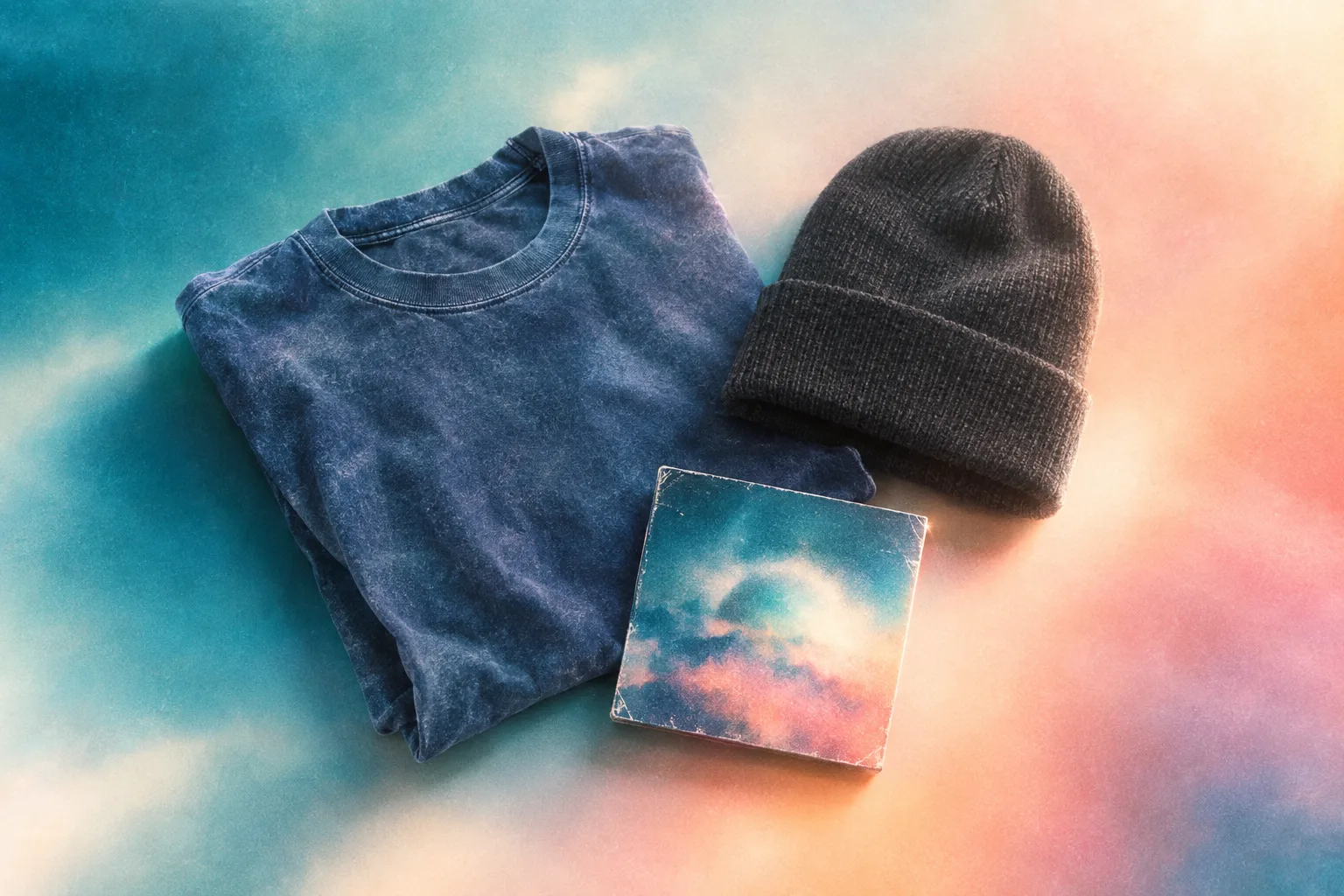
Backstage AI is the merch and branding studio from Backstage AI LLC, built for musicians who do not have a design team. Indie bands use it to make logos, album covers, tour posters, and band merch, then sell from a live store without holding inventory. Print on demand is the fulfillment model. Start for $0 is the inventory rule.
Indie here means the band is the operations staff. There is no in-house designer waiting on a brief. The constraint is time between practice, booking, and the actual music. The studio has to finish assets you can ship: a cover for the release, a flyer for the date, a tee in a shop. No minimums means you do not wait for a dozen friends to want the same size.
What Backstage AI is for
Backstage AI is not a generic print catalog with a music sticker on it. It is a musician-first path: visuals for the release, merch that matches those visuals, and a shop that fulfills print-on-demand. The sibling consumer product for non-musician creators is MRCH. If you are a band, start on Backstage.
- Covers that have to read as a streaming tile.
- Logos and wordmarks you will reuse on merch and posters.
- Tour tees and flyers that share one campaign.
- A live shop so fans can buy without you packing boxes.
A first week without a designer
Do not start by generating twenty logos. Start with the next public object. If a single is coming, make the cover. If a show is coming, make the poster and one tee. If nothing is dated, make a wordmark and one evergreen shirt so the shop is not empty when someone asks “where’s merch?”
Sequence: lock the name spelling, generate or upload a logo, make the cover, extend to poster, place merch, price against production cost, publish the shop. The visual pipeline is album covers and tour posters in one workflow. The sell pipeline is how musicians sell band merch.
Logos: make one, then stop
A band needs a logo that works at a favicon and on a kick drum, not a new mascot every Friday. Generate options, pick one, upload that file going forward. Regenerating a “similar” logo is how you get three almost-brands on three products. The live listing should use the same logo as the cover.
If you already have a logo from a human designer, upload it. AI is for the assets you do not have, not for replacing a logo your audience already knows.
Merch without a merch manager
Print-on-demand means you list a tee without buying a size run. That matches an indie calendar: some months are quiet, some weekends spike. You still need a price that covers production. You still need a URL on the poster. You do not need a storage unit.
Keep the catalog small. One release tee and one logo tee beat a store that looks like a dump of experiments. Add a tour SKU when there is a tour. Retire dates when the tour ends so the shop does not advertise a finished itinerary.
How this differs from Merch by Amazon
Merch by Amazon is Amazon’s merch program: you apply, you list into their catalog, you follow their category and content rules. Backstage AI is your shop plus musician visuals. If Amazon is the comparison, read Backstage AI vs Merch by Amazon. They are different channels. Many bands will not want to wait on a program application to put a URL on a flyer this week.
Generic POD dashboards (Printful, Printify) assume you already have a store and a designer. That is extra homework for a four-piece that needed a cover yesterday. On the musician side the app is Backstage AI, not a catalog you wire into another shop.
Roles in a band with no staff
Assign one person to the shop: files, price, publish, payout email. Assign one person to put the URL on real-world materials. If everyone generates, nobody publishes. The software will not run a merch committee.
- Owner: publishes products and holds payout access.
- Art: locks cover and logo; merch uses those files.
- Promo: puts the shop link on posters, stories, and the set break.
Start this week
A workable week is four finishes, not a mood board. Day one: lock the title and logo. Day two: cover. Day three: poster with real show facts. Day four: one tee priced and published. If a day slips, slip the announce date — do not announce a cover that is still a placeholder.
Download Backstage AI on the App Store or Google Play. Finish one cover or one tee, not both half-done. Publish the shop when the first product is priced. Put the URL on the next thing you already print. There is no Backstage web editor; the MRCH web editor is at https://www.sellmerch.ai. That is the whole system for a band without a design team.
Company context lives on About Backstage AI. Questions about the musician product are on the Backstage AI FAQ. The work, though, is in the canvas: one idea, several surfaces, a live store.
FAQ
Do indie bands need a designer to sell band merch? No. Backstage AI is built for bands that are also the ops staff. Lock a logo, make the next public object, publish a shop.
Can we start without buying a size run? Yes. Start for $0 and no minimums: list first, print after checkout. Production still costs money on each paid order.
Should we use MRCH or Backstage AI? Bands start on Backstage AI — covers, posters, and merch in one musician studio. MRCH is the sibling product for non-musician creators, including a web editor.
How is this different from Merch by Amazon? Amazon’s program is their catalog with an application. Backstage AI is your shop plus musician visuals. Comparison.
Backstage AI
Make the cover. Print the merch.
Continue on Band merch — covers, tour tees, and a live shop.